Dental Implants vs. Dentures: Which Option Is Right for You?
Missing teeth can affect much more than your smile. They can make it difficult to eat certain foods, speak clearly, and feel confident in social situations. Fortunately, modern dentistry offers several effective tooth replacement options, with dental implants and dentures being two of the most common. While both treatments restore the appearance and function of your smile, they differ in terms of comfort, longevity, maintenance, and cost.
If you're considering tooth replacement, understanding the advantages of each option can help you make an informed decision in consultation with your dentist.
What Are Dental Implants?
Dental implants are artificial tooth roots, typically made from titanium or other biocompatible materials, that are surgically placed into the jawbone. Once the implant has fused with the bone through a process called osseointegration, it serves as a stable foundation for a crown, bridge, or denture.
Dental implants are designed to closely mimic the look, feel, and function of natural teeth, making them a popular long-term solution for tooth loss.
What Are Dentures?
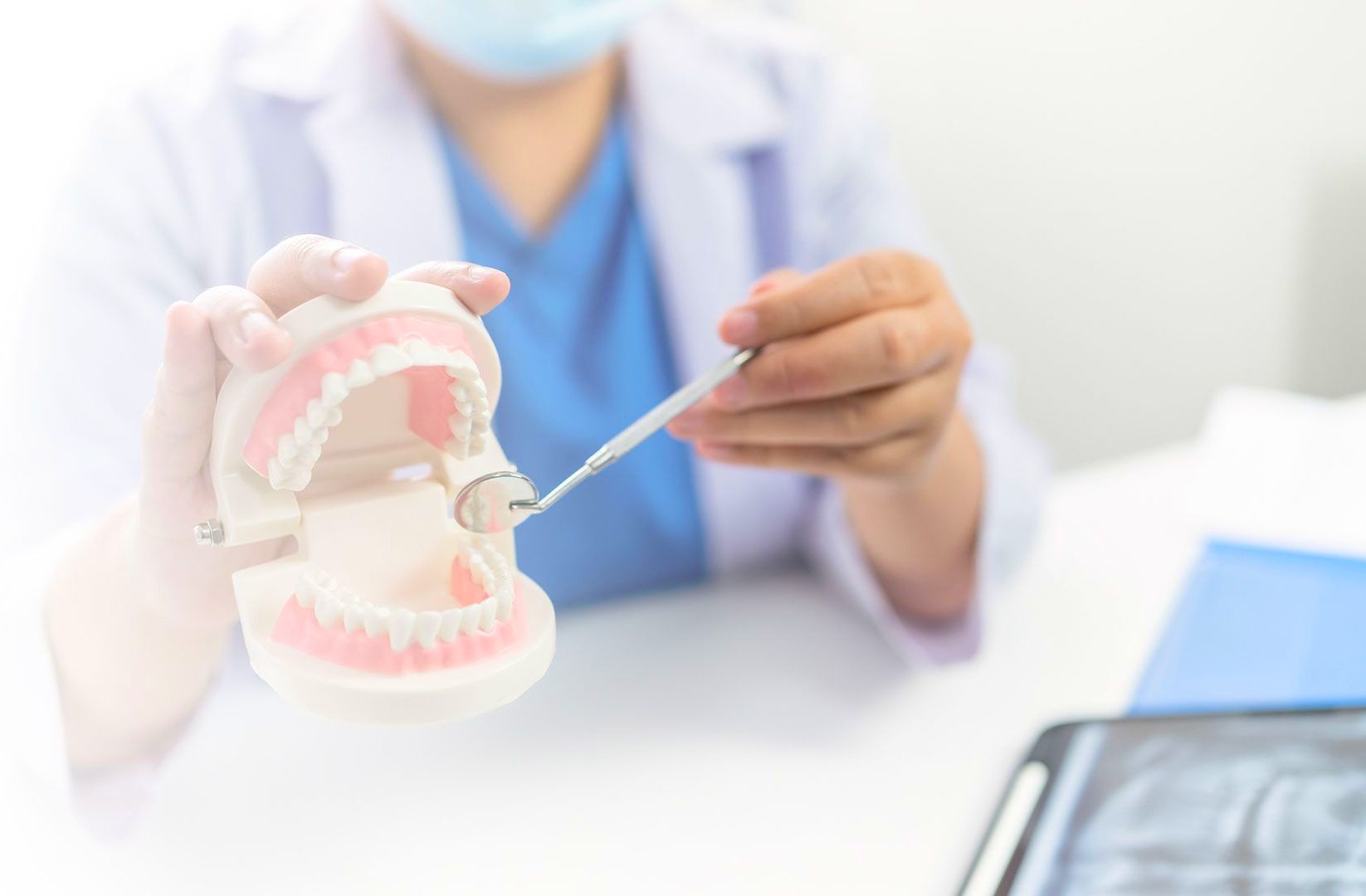
Dentures are removable prosthetic appliances that replace multiple missing teeth or an entire arch of teeth. Depending on your needs, your dentist may recommend:
- Full dentures for patients missing all teeth in the upper or lower arch
- Partial dentures for patients who still have some healthy natural teeth
Modern dentures are custom-made to fit comfortably and restore both appearance and function.
Comparing Appearance
Both dental implants and dentures are designed to improve your smile, but they achieve this in different ways.
Dental implants:
- Closely resemble natural teeth
- Are permanently secured in place
- Help maintain natural facial contours
- Blend seamlessly with surrounding teeth
Dentures:
- Restore the appearance of missing teeth
- Can be customized for a natural-looking smile
- May require occasional adjustments as the mouth changes over time
Advances in dental technology have made today's dentures more natural-looking than ever before.
Stability & Comfort
One of the biggest differences between implants and dentures is stability.
Because dental implants are anchored directly into the jawbone, they generally remain secure while eating, speaking, and smiling. Many patients report that implants feel very similar to natural teeth once healing is complete.
Traditional dentures rest on the gums and may rely on suction or dental adhesive to remain in place. Although properly fitted dentures can be comfortable, some patients experience movement during eating or speaking, especially as the jawbone changes over time.
Eating & Speaking
Replacing missing teeth improves everyday activities such as chewing and speaking.
Dental implants often allow patients to:
- Eat a wider variety of foods
- Bite with greater confidence
- Speak naturally
- Enjoy improved chewing efficiency
Denture wearers may need time to adjust, particularly when eating firmer foods or pronouncing certain words. Your dentist can provide guidance to help make the transition easier.
Jawbone Health
An important benefit of dental implants is their ability to stimulate the jawbone.
When a natural tooth is lost, the underlying bone no longer receives stimulation during chewing, which can gradually lead to bone loss. Dental implants help preserve bone by functioning similarly to natural tooth roots.
Traditional dentures restore missing teeth but do not replace tooth roots, so they do not prevent the bone changes that naturally occur after tooth loss.
Maintenance Requirements
Both options require ongoing care to maintain good oral health.
Dental implants should be cared for by:
- Brushing twice daily
- Flossing or cleaning around the implant
- Attending regular dental checkups
- Maintaining healthy gums
Dentures require:
- Daily cleaning
- Removal for overnight soaking when recommended
- Routine dental evaluations
- Occasional adjustments or relining as the mouth changes
Following your dentist's care instructions helps maximize the lifespan of either restoration.
Which Option Is Right for You?
The best treatment depends on several individual factors, including:
- The number of missing teeth
- Overall oral health
- Jawbone density
- Medical history
- Lifestyle preferences
- Budget
- Long-term treatment goals
Some patients may even benefit from implant-supported dentures, which combine the stability of implants with the convenience of a denture restoration.
Restore Your Smile at The Oral Surgery Center of Pensacola
Whether you choose dental implants or dentures, replacing missing teeth can improve your smile, oral function, and overall quality of life. Keeping this in mind, the experienced team at the Oral Surgery Center of Pensacola is standing by to provide support. Our qualified caregivers are proud to assist patients across the Brent, Ensley, Ferry Pass, and Pensacola, FL communities.